
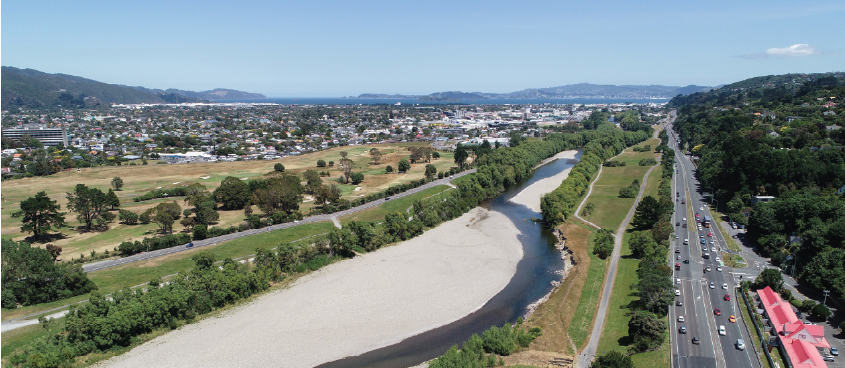
Greater Wellington has updated its cost estimate for the flood protection component of Te Wai Takamori o Te Awa Kairangi (formerly RiverLink) and is continuing discussions with the government on…

Capping rates increases at 4% would fail to recognise the real cost borne by Greater Wellington for protecting communities, maintaining essential services and investing in the region’s long-term resilience.
Greater Wellington Chair Daran Ponter says the rates capping bill announced by the government today does not account for councils’ responsibilities, infrastructure pressures and exposure to rising costs.
“If passed into law, the bill could force difficult trade-offs between affordability today and higher costs tomorrow,” Cr Ponter says.
“History shows that deferring essential infrastructure investment does not make the cost disappear. It allows problems to grow, transfers costs to future generations, and can leave communities facing more expensive, disruptive, and poorer solutions.
“New Zealand has seen the consequences of sustained underinvestment in water services. We must not repeat that pattern across flood protection, public transport, and other essential regional infrastructure.
Cr Ponter says Greater Wellington supports disciplined financial management and greater transparency but cautions against measures that prioritise an artificial short-term target over long-term value.
“Affordability matters. Greater Wellington has a responsibility to scrutinise every dollar and demonstrate value to the community. But genuine affordability is not achieved by postponing essential work until it becomes an emergency.
“The Government must design its rates-capping system carefully so that it does not recreate the infrastructure deficit New Zealand is now paying to fix. A rates cap must not become an investment or resilience cap,” Cr Ponter says.
Greater Wellington Deputy Chair Ros Connelly says the region’s rural areas need certainty that capping rates will not limit the ability of local government to manage land, water and climate-related risks.
“Farmers, iwi, landowners and rural communities depend on effective flood protection, erosion control, pest management and healthy waterways,” Cr Connelly says.
“If councils cannot keep pace with the cost of delivering that work, the result will not be a genuine saving. Costs and risks will shift to property owners, communities and future generations.”
Constraints on rates revenue could also affect councils’ borrowing capacity, increasing financing costs and delaying critical projects, Cr Connelly says.
“Because council debt is secured against rates revenue, a cap could weaken our ability to borrow and fund major infrastructure traditionally built and paid for over generations.
“A rates cap based solely on CPI inflation would also fail to reflect the actual cost pressures facing councils. Construction and maintenance prices typically rise faster than general inflation, while inflationary pressure on unavoidable costs like insurance premiums won’t be capped by this bill.
“If revenue cannot keep pace with these costs, councils may need to reduce services, delay renewals, increase fees and charges, or reconsider essential capital investment. Those choices can weaken resilience and ultimately cost communities more.
“For public transport, that could mean higher fares, fewer services, or deferred investment. These outcomes would fall hardest on people who rely on affordable public transport to access employment, education, healthcare and essential services,” Cr Connelly says.
“Rather than imposing a one size fits all approach, we’re calling on the Government to work with the local government sector to produce a transparent rates-capping framework region-by-region,” Cr Ponter says.
“In the Wellington Region, the government is effectively signalling cuts to public transport and flood protection schemes. We will leave it to the Minister of Local Government to explain to our communities why their bus and train services have to be cancelled and why they are in danger of flooding.”
Greater Wellington has updated its cost estimate for the flood protection component of Te Wai Takamori o Te Awa Kairangi (formerly RiverLink) and is continuing discussions with the government on…
Community feedback sought on the future of Hutt Valley bus services Greater Wellington is asking Hutt Valley residents to help shape the future…

Greater Wellington councillors approved the 2026/27 Annual Plan today, agreeing to continue essential regional services while limiting the average regional rates increase to 9.7%. The per annum average regional rates increase…